 Ocala Mobile Home Leveling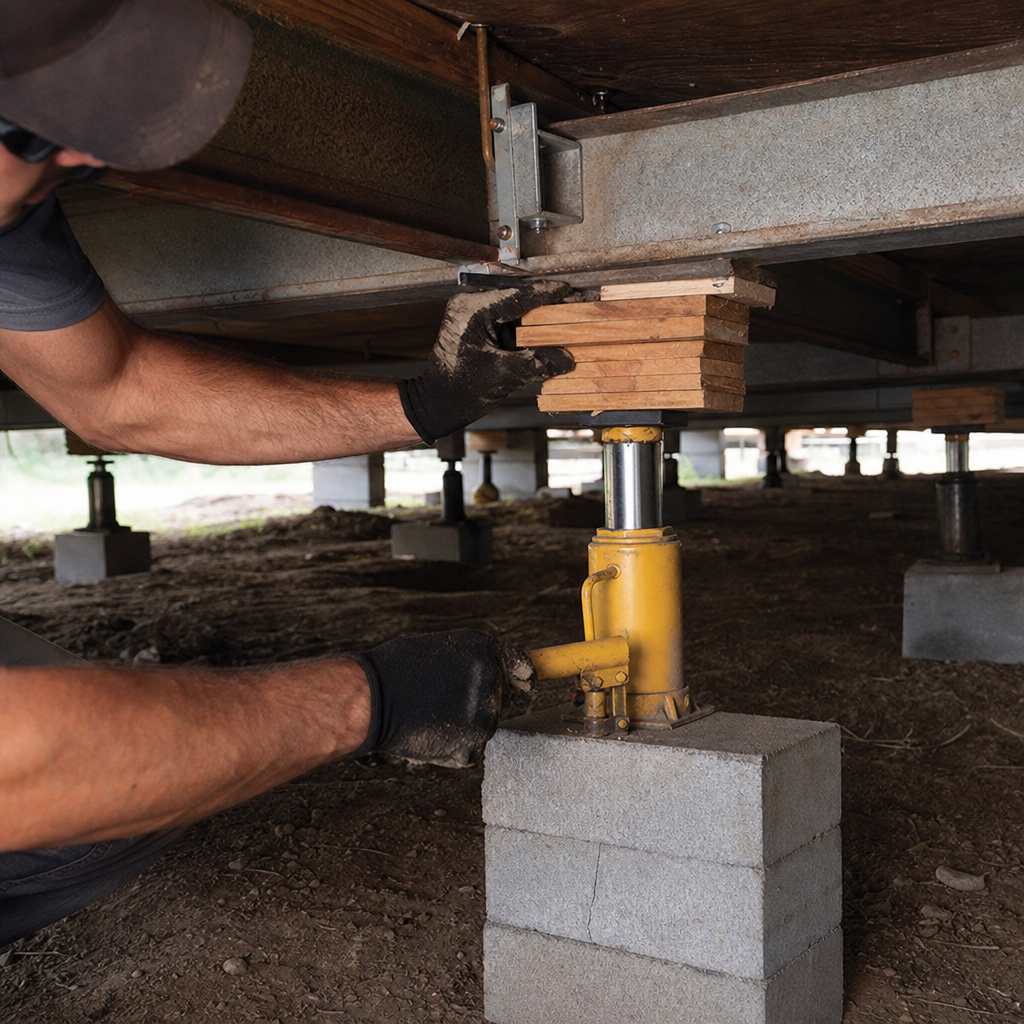
If your Ocala mobile home has sticking doors, sloping floors, or a gap opening along the marriage line, it needs to be releveled, and in Marion County that costs $450–$800 for a singlewide and $750–$1,400 for a doublewide, usually done in a day. The level check is free, the quote is flat, and we publish our prices because most leveling outfits won’t.
Marion County has one of the biggest manufactured-home inventories in North Central Florida. The 55+ communities stacked along the SR 200 corridor southwest of town, the park strip running down US 441 through Belleview and Summerfield, the older all-ages parks out SR 40 toward Silver Springs, the river-country parks around Dunnellon, thousands of homes, most of them sitting on block piers in deep Florida sand. That sand is why we exist.
What releveling actually is
Your home doesn’t sit on a slab. It sits on a steel I-beam chassis carried by rows of piers, usually stacked concrete blocks on footing pads, with hardwood shims driven tight between the pier cap and the beam. When the ground under a pier compacts or washes, that pier drops, the beam sags over it, and everything built on top of the frame telegraphs the movement: door frames rack out of square, drywall cracks at the corners, floors dip.
Releveling puts the frame back on a flat plane. Here’s the actual process, because you should know what you’re paying for:
- Map the frame with a water level. The crew pulls skirting access panels, crawls the home, and shoots every pier off a datum, typically the most stable pier. A water level doesn’t lie and doesn’t drift; it shows exactly which piers dropped and by how much, down to the fraction of an inch.
- Lift on cribbing, in small increments. 20-ton hydraulic bottle jacks set on solid wood cribbing, placed at the frame near each low pier. The frame comes up a little at a time, working across the home, never cranking one point far out of plane. That’s the difference between a clean relevel and one that cracks your drywall.
- Rebuild the low piers. Re-stack blocks, replace crushed or rotted caps and pads, and drive new hardwood shims tight. HUD installation standards limit how tall a shim stack can be, a pier that needs a tall stack gets rebuilt, not shimmed. That’s pier and pad repair, and it’s often part of the job on older setups.
- Verify with the level, pier by pier. Every pier gets re-shot and load-checked. A pier you can rattle by hand is carrying nothing. On a doublewide, the marriage line has to close back up.
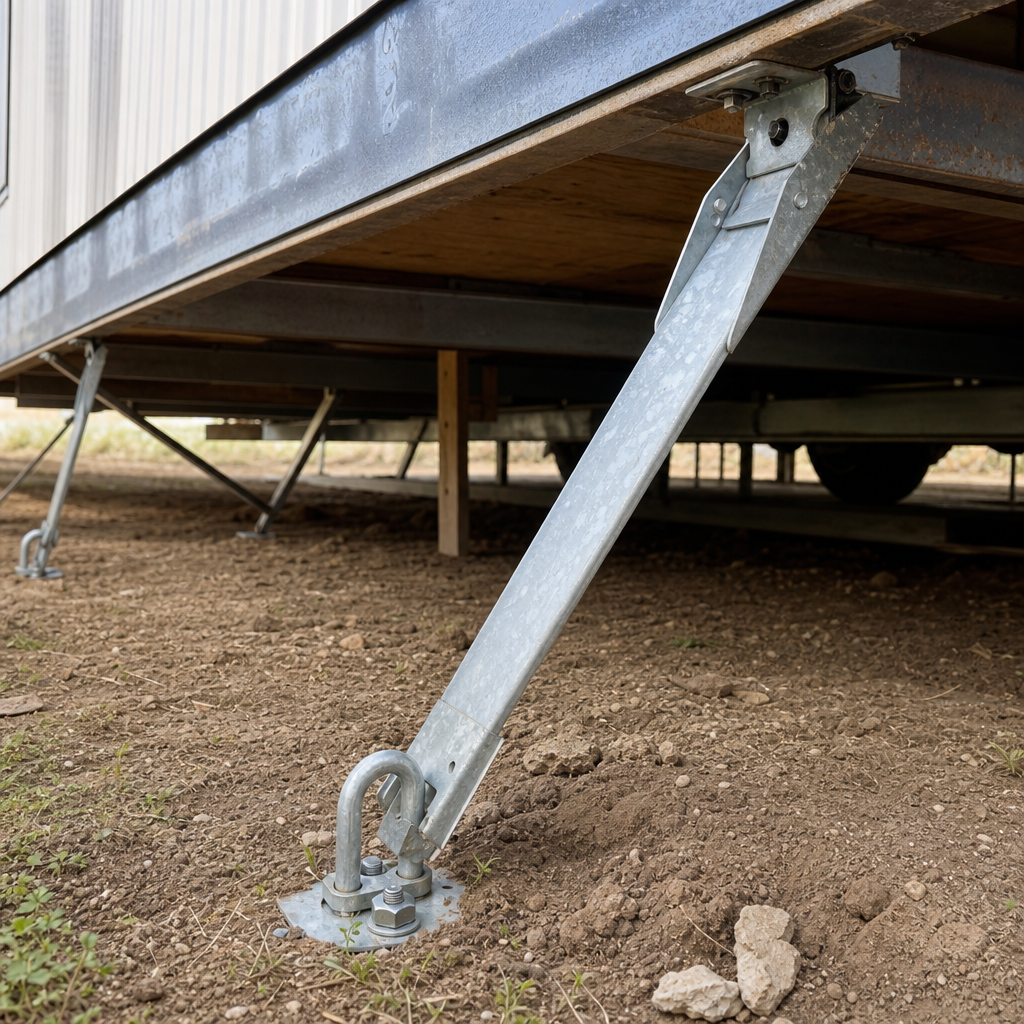
- Re-tension the tie-downs. A settled home leaves its anchor straps slack. The crew re-tensions to spec before closing the skirting, because a strap with slack in it does nothing in a storm. If your anchors are old or undersized, that’s a separate conversation: see tie-downs and anchors.
One safety note that tells you whether a crew knows what it’s doing: nobody works under a home held only by a jack. The cribbing carries the load. Always.
Why Ocala homes go out of level
The sand. The uplands around Ocala, including most of the ground under the SR 200 communities and the US 441 corridor, are deep, excessively drained fine sands. The Candler soil series, the textbook example, was first established right here in Marion County. These sands drain fast, hold almost no moisture, and compact under concentrated loads. A block pier concentrates several thousand pounds on a couple of square feet of that sand. It moves. Not fast, not dramatically: a quarter inch here, a half inch there, over a few wet summers.
The rain. Marion County gets the classic Central Florida pattern: a soaking thunderstorm nearly every summer afternoon, June through September. Water moving through sand carries fines with it, and where drainage off the roof or the lot concentrates near a pier row, the pad settles faster. Most leveling calls come in fall, right after the rainy season has done its work.
The age of the stock. A big share of Marion County’s parks were built out in the 1970s and 80s, and plenty of homes here predate the July 1994 HUD wind-standard update. Older homes often sit on original piers with 30- and 40-year-old caps and shims that have crushed, split, or rotted. They also carry the old anchor setups that insurers have started scrutinizing hard since Ian and Milton, more on that below.
Hurricanes. Marion County is inland, but Irma, Ian, and Milton all put tropical-storm-force winds through here. Wind works a home against its straps; saturated ground lets piers shift. After any named storm, a level-and-tie-down check is cheap insurance.
The services, in plain terms
- Mobile home leveling: the core job: water-level survey, hydraulic lift, new shims, full re-check. Singlewide $450–$800, doublewide $750–$1,400.
- Pier and pad repair: reset or reshim $75–$150 per pier during a relevel; full rebuild with new blocks, cap, and pad $150–$400 per pier.
- Tie-downs and anchors: installs, retrofits, and re-tensioning to Rule 15C-1 and HUD wind-zone standards. Full jobs $600–$3,500 depending on anchor count.
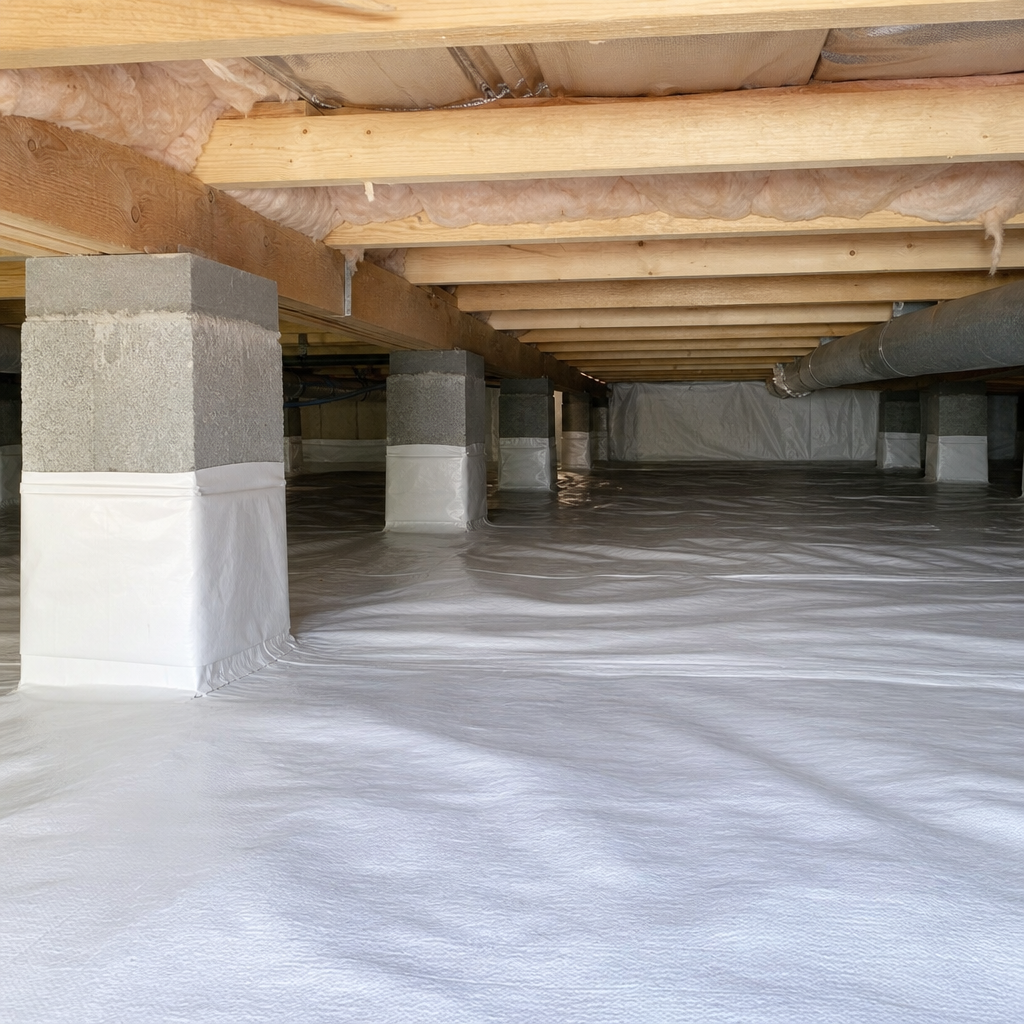
- Vapor barrier replacement: patch repairs $300–$800; full underbelly replacement $1,200–$4,500. Settling tears the barrier; the barrier is what keeps ground moisture out of your subfloor.
- Skirting repair: panels, vents, and access doors $200–$800; full vinyl replacement $900–$2,500. Buckled skirting is usually a symptom of settling, so we check the level first.
- Pre-sale leveling inspection: level, support, and tie-down check with a written report, $150–$350, commonly credited toward any work found. Parks, lenders, and insurers around here ask for these constantly.
Full ranges and what moves the price are on the pricing page. For what it prevents (racked door frames, spreading drywall cracks, a torn underbelly) releveling sits at the affordable end of home repairs, and publishing the prices is how we keep it that way.
Insurance, parks, and paperwork: the Marion County reality
Two pieces of local context worth knowing before you call anyone.
Insurance has tightened. After Ian and Milton, Florida carriers got strict about manufactured homes. Many now require proof of a current tie-down inspection before writing or renewing a policy, and homes with outdated or undocumented anchoring face higher premiums or flat declines, especially pre-1994 homes, which make up a lot of Marion County’s park stock. A relevel with a strap re-tension, documented, is often the cheapest thing you can do for your insurability.
Permits and licensing are real here. Florida law requires that leveling, blocking, and tie-down work on a manufactured home be done by a state-licensed mobile home installer (§320.8249 F.S., Rule 15C-1), and Marion County Building Safety requires the installer’s license number on permit applications for installation work. That’s not red tape to dodge. It’s your protection. Ask for the installer’s license number up front, and expect anchor work to be done to 15C-1 standards.
Straight answers, including the one you won’t love
Releveling on Florida sand is periodic maintenance, not a permanent cure. Unless the drainage or pad problem that caused the settling gets corrected, a home on soft ground will need attention again in 3–5 years. Anyone who promises you a “lifetime level” on Candler fine sand is selling something. What a good crew does is fix what’s fixable (rebuild bad piers on proper pads, point out the downspout that’s dumping onto a pier row, re-tension the straps) and tell you honestly what to expect. That’s how we work, and it’s why our customers call us back instead of calling around.
Get a free level check
Tell us the symptoms (which doors stick, where the floor slopes, whether the marriage line has opened) and roughly where the home is: SR 200 corridor, Belleview, Summerfield, Silver Springs, Dunnellon, or anywhere in between. That whole list is home ground for us: we work every corner of Marion County from the Ocala hub. We’ll get a local crew out for a free level check and give you a flat, written number before anyone touches a jack. Curious how the pricing breaks down first? It’s all published on the pricing page, and the FAQ covers the rest.