 Ocala Mobile Home Leveling
 Mobile Home Tie-Downs & Anchors in Ocala
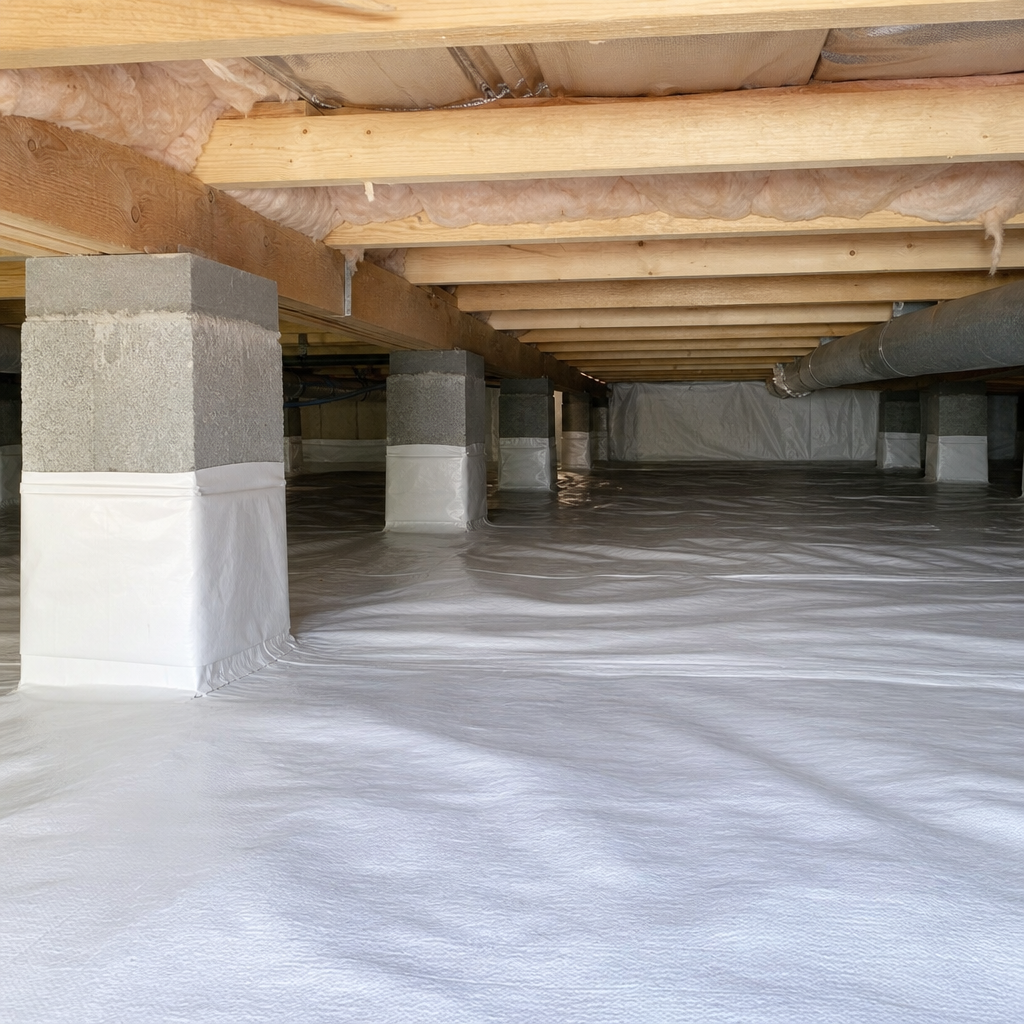
Tie-downs are the ground anchors and steel straps that keep your mobile home on its piers when the wind tries to take it off them. In Ocala, strap re-tensioning is often bundled into a relevel, anchor repairs run $600–$1,500, and a full install or retrofit to current standards runs $1,500–$3,500. Florida requires anchor work to be done by a state-licensed mobile home installer to Rule 15C-1, which is not optional, and below we’ll explain why that protects you.
Marion County is inland. You still need this. Here’s the honest version.
Ocala sits in HUD Wind Zone II, and Marion County doesn’t take the direct coastal hits that Fort Myers or the Big Bend do. But “inland” is doing less work than it used to. Irma in 2017, Ian in 2022, and Milton in 2024 all pushed tropical-storm-force winds across Marion County, and a manufactured home doesn’t need Category 4 winds to move. What tips homes off piers in inland counties is almost never dramatic footage weather; it’s 50–70 mph gusts working on a home whose straps went slack years ago.
And straps here do go slack, for a reason specific to this ground: settling. Anchor straps are tensioned against a home at a fixed height. When the county’s deep fine sands compact under the piers and the home drops even a half inch, the geometry changes and the straps lose tension. A settled home is an under-anchored home, automatically. That’s why a proper relevel always ends with a strap re-tension, and why tie-downs and leveling are one conversation, not two.
What a tie-down system actually consists of
- Ground anchors: galvanized steel augers screwed several feet into the soil, rated for the load and matched to soil type. Marion County’s sandy uplands take specific anchor types and depths; sand that drains this fast holds an anchor differently than clay, and a licensed installer sizes for it. Most homes need 12–20+ anchors.
- Frame ties: steel straps from the anchors to the chassis I-beams, tensioned to spec.
- Over-the-top / sidewall ties: on many homes (and generally on pre-1976 homes), straps that run over or into the structure itself, not just the frame.
- Stabilizer plates: driven at each anchor head to stop the anchor from rotating sideways under load, required in most modern installs.
Every component has a rating stamped on it and a standard behind it: Rule 15C-1 in Florida, HUD Parts 3285/3286 federally, and your home’s installation manual. The system is only as strong as its weakest strap, its rustiest anchor head, or its slackest connection.
The pre-1994 problem in Marion County’s parks
A large share of the homes in this county’s parks, along US 441 through Belleview and Summerfield, out SR 40 near Silver Springs, around Dunnellon, predate the July 1994 HUD wind-standard overhaul that followed Hurricane Andrew. Florida also significantly upgraded its anchoring rules in 1999. A home set before those changes commonly has fewer anchors, lighter straps, wider spacing, and no stabilizer plates: legal when installed, well short of what current standards call for, and exactly what insurance carriers have started flagging.
That’s the second reason this page exists. Since Ian and Milton, the Florida manufactured-home insurance market has tightened hard: carriers routinely want proof of current tie-down condition before writing or renewing, pre-1976 homes struggle to find coverage at all, and pre-1994 homes pay meaningfully more without documentation. A tie-down inspection and re-tension with paperwork is one of the cheapest things you can do for your insurability, and if you’re selling, the park office and any FHA/VA lender will want the same documentation, which is what our pre-sale leveling inspection covers.
What the work looks like
Inspection. The crew crawls the home and audits the full system: anchor count against your home’s requirement, anchor condition (rust-through at the soil line is the classic silent failure), strap tension and corrosion, stabilizer plates, and connection hardware. You get the count: what you have, what the standard calls for, what’s failed.
Re-tension. If the system is sound but slack, the usual finding after settling, straps are re-tensioned to spec. Bundled with a relevel, this is often minimal or no added cost.
Repair or retrofit. Failed anchors are replaced; missing ones are added; light pre-1999 setups are brought up to current Rule 15C-1 standards with proper anchors, straps, and stabilizer plates. Permits through Marion County Building Safety are handled by the licensed installer where required, the county’s application requires the installer’s license number, so unlicensed work can’t even be permitted properly.
Documentation. You get a written record of what was inspected, tensioned, and installed. Keep it with your policy. It’s the page your carrier asks for.
Timing, honestly
The smart calendar: get inspected before June 1, when hurricane season opens. That’s when demand spikes and schedules fill. After any named storm passes over the county, a re-check costs little and catches straps that worked loose. And if you’re releveling anyway, the re-tension rides along nearly free. What we won’t do is manufacture panic in February; slack straps aren’t an emergency in the dry season, they’re a to-do item with a deadline of June.
Prices for every scenario are on the pricing page. If you don’t know what’s under your home, and most owners honestly don’t, start with the free inspection and find out what you’re standing on before the wind or your insurer asks.
Frequently Asked Questions
How much do mobile home tie-downs cost in Ocala?
Strap re-tensioning is often bundled with a relevel at little or no added cost. Partial anchor and strap repairs run $600–$1,500, and a full anchor system install or retrofit runs $1,500–$3,500 depending on home size and anchor count. Most homes need 12–20+ anchors.
How many anchors does my home need?
It depends on home length, width, and setup, per Florida Rule 15C-1 and the manufacturer's installation manual: most Marion County homes land at 12–20+ anchors with both frame ties and, on many homes, over-the-top or sidewall straps. The free inspection counts what you have against what your home requires.
Are my old tie-downs good enough if they haven't failed yet?
Maybe, but 'hasn't failed' isn't the standard, and slack straps are as good as no straps. Homes anchored before the 1999 Florida anchoring upgrades (and especially pre-1994 homes) often have fewer, lighter anchors than current standards call for. An inspection tells you where you stand before a storm or an insurance audit does.
Will my insurance company actually check my tie-downs?
Increasingly yes. Since Ian and Milton, many Florida carriers require documentation of current tie-down condition before writing or renewing manufactured-home coverage, and some send inspectors. Undocumented or outdated anchoring means higher premiums, restrictions, or declines. A documented inspection and re-tension is the cheap way through.
Do anchors need a permit in Marion County?
Anchor and installation work generally requires a permit through Marion County Building Safety, and the application asks for the state-licensed installer's number. The installer pulls the permit where it applies, one more reason this isn't a handyman job.